
Roof Leak Repair: Common Causes and Effective Solutions

Reliable Roof Leak Repair Advice
Roof leak repair is something most homeowners will face at some point, and it often catches people off guard. You might notice a water stain spreading across your ceiling after a storm, or perhaps you hear dripping sounds in the attic during heavy rain. These moments spark immediate questions.
How serious is this?
Can I fix it myself?
Will my insurance cover it?
The truth is, roof leaks rarely appear without warning. There are usually signs leading up to the problem, and understanding what causes them can help you act before minor damage becomes a major expense. Taking time to learn about common leak sources puts you in control.
Need expert help? Contact Rivertop Roofing today to schedule a free inspection - no obligation, fast, professional and friendly so you know what's going on with your home!
1-888-909-5424
Why Do Roofs Start Leaking?
Several factors contribute to water finding its way through your roof. Some are sudden and obvious, while others develop slowly over time without visible warning.
Weather plays a significant role, especially in regions that experience intense summer heat, heavy thunderstorms, and occasional hail. Temperature swings cause roofing materials to expand and contract repeatedly, which gradually weakens seals and creates small gaps.
Add wind driven rain to the mix, and water can penetrate areas that seemed perfectly fine just months ago. Severe weather puts tremendous stress on roofing systems.
Age is another major factor that homeowners often overlook. As shingles get older, they lose flexibility and their protective granules wear away. Seals around vents and chimneys deteriorate with constant exposure to the elements. If your roof is approaching 20 years old, it becomes more vulnerable to problems that would not affect a newer installation.
Storm damage deserves special attention because it can compromise your roof without obvious visible signs. High winds can lift shingles or tear them off entirely. Hail leaves dents and cracks that compromise the protective surface. If you suspect storm damage, knowing whether to contact insurance first or a roofer can save you time and money.

Common Entry Points for Water
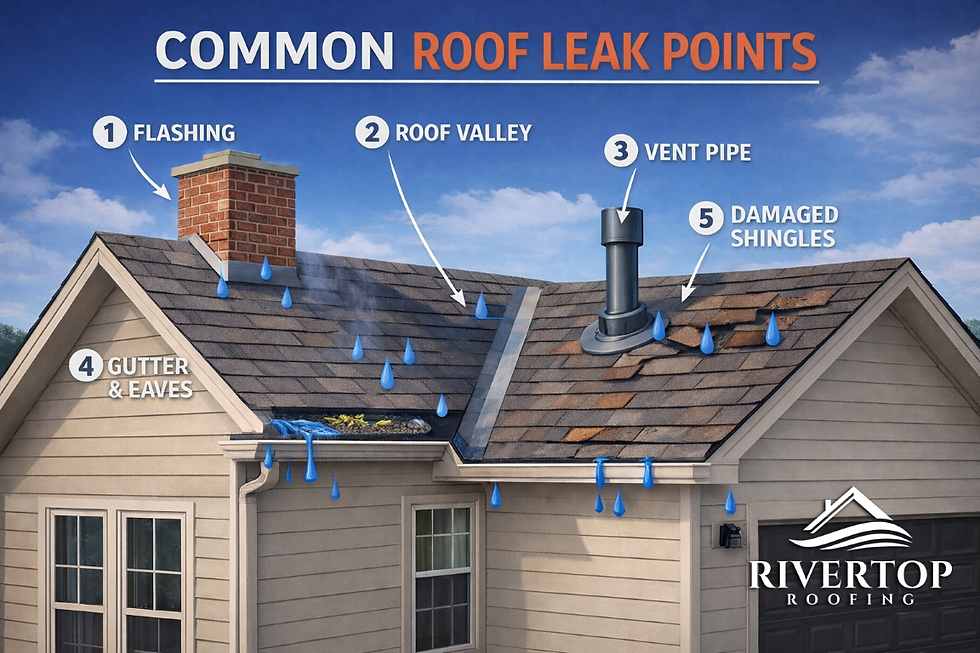
Not all parts of a roof are equally susceptible to leaks. Certain areas require extra attention because they are natural weak points in your roofing system. Flashing is one of the most common culprits behind roof leak repair calls. This thin metal material is installed around chimneys, skylights, vents, and anywhere the roof surface meets a vertical structure.
When flashing is poorly installed, damaged, or corroded over time, it creates pathways for water to enter your home. Learning about different components of a roof helps you understand how these elements work together to keep water out.
Valleys where two roof slopes meet also present significant challenges. Water naturally flows toward these areas during rain, making them high traffic zones for runoff. If the underlayment or flashing in valleys is compromised, leaks are almost inevitable during heavy rainfall.
Pipe boots and vent covers protect openings where plumbing vents exit through the roof. The rubber seals on these components degrade over time, cracking and shrinking due to constant sun exposure. A failed pipe boot is a surprisingly common source of water intrusion that many homeowners overlook.
Clogged gutters create conditions that allow water to back up under shingles. When gutters overflow, water pools at the edge of the roof instead of draining away properly. This standing water can seep beneath roofing materials.
Warning Signs You Should Not Ignore
Detecting a leak early can mean the difference between a minor repair and extensive damage to your home. Pay close attention to these warning indicators.
Water stains on ceilings or walls are obvious red flags that demand attention. They often appear as brownish discoloration that grows over time. The stain may be far from the actual leak location since water can travel along rafters and sheathing before dripping down into living spaces.
Musty odors in the attic suggest moisture is accumulating somewhere in your roofing system. Mold and mildew thrive in damp environments and produce distinctive smells that should prompt immediate investigation.
Missing or damaged shingles are visible from the ground in many cases. Walk around your property after storms and look for gaps in the roof surface or shingles lying in the yard.
Sagging areas indicate water has saturated the decking underneath your shingles. This requires immediate professional attention because structural damage may already be occurring.
When To Call a Professional
Some roof leak repairs are straightforward enough for handy homeowners, but many situations require professional expertise. Climbing onto a roof presents real safety risks, and incorrect repairs can actually make problems worse.
A professional inspection makes sense when you cannot pinpoint the leak source on your own. Water often enters in one spot and travels considerable distances before becoming visible inside your home. Trained inspectors know exactly how to trace leaks back to their origin point.
If your roof has sustained storm damage, having a professional document the condition is critically important for insurance purposes. They can identify damage patterns that adjusters recognize and provide detailed photo reports to support your claim.
Older roofs benefit from professional evaluation because multiple issues may exist simultaneously. What appears to be a simple leak could reveal underlying problems with ventilation or decking that a complete inspection would uncover. If an old roof is causing insurance complications, getting expert advice is essential.
Repair Options Explained
The appropriate repair depends entirely on what is causing the leak in the first place.
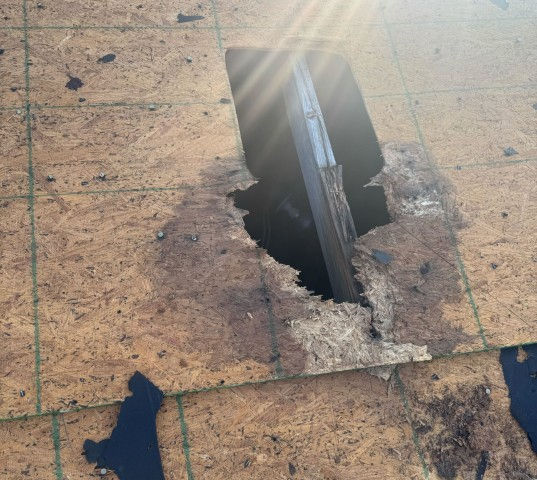
Shingle replacement addresses missing or damaged shingles effectively. A roofer removes the affected shingles along with any damaged underlayment, then installs new materials that match your existing roof.
Flashing repair or replacement fixes leaks occurring around chimneys, vents, and other penetrations. The old flashing is carefully removed, the area is thoroughly cleaned, and new flashing is properly sealed and integrated with surrounding materials.
Pipe boot replacement solves problems with cracked or deteriorated vent seals. This relatively inexpensive repair prevents water from entering around plumbing vents and is often overlooked.
Partial or full roof replacement becomes necessary when damage is too extensive for spot repairs or when the roof has reached the end of its service life. Rivertop Roofing works with homeowners through this entire process, helping navigate both construction and insurance considerations.
Preventing Future Leaks
Proactive maintenance significantly reduces the likelihood of dealing with leaks later. Schedule regular professional inspections, ideally twice per year and after major storms pass through.
Keep gutters clean throughout the seasons and ensure downspouts direct water away from your foundation. Trim overhanging tree branches that could fall on your roof during storms or deposit debris.
Address small issues promptly whenever you notice them. A missing shingle or cracked caulk may seem minor, but these openings invite water directly into your roofing system where damage spreads quickly.
Check attic ventilation regularly. Poor airflow causes heat and moisture buildup that accelerates shingle deterioration. Understanding how architectural shingles and ventilation work together helps you make informed decisions.
The Bottom Line
Dealing with a leaky roof is stressful, but understanding the causes and solutions puts you in a much better position to respond effectively. Catching problems early almost always saves significant money compared to waiting until damage spreads.
Your roof is your first line of defense against the elements, and roof leak repair keeps that protection intact for your home and family.
Need expert help, fast? Contact Rivertop Roofing today to schedule a free inspection - no obligation, fast, professional and friendly so you know what's going on with your home!
1-888-909-5424
Frequently Asked Questions (FAQs)
1. How quickly should I address a roof leak?
You should address a roof leak as soon as you notice it. Even small leaks can cause significant damage over time, including mold growth, rotted decking, and damaged insulation. If you cannot get immediate professional help, placing a bucket under drips and covering the area with a tarp provides temporary protection.
2. Can I repair a roof leak myself?
Simple repairs like replacing a few shingles or applying sealant to small cracks are manageable for homeowners comfortable working at heights. However, most roof leak repairs benefit from professional attention. Incorrectly identifying the leak source can lead to recurring problems and additional damage.
3. Will my homeowners insurance cover roof leak repair?
Insurance typically covers roof damage caused by sudden events like storms, hail, or fallen trees. Damage from normal wear and tear, lack of maintenance, or an aging roof is usually not covered. Consider having a roofing professional inspect your roof before filing a claim.
4. How do I find where a roof leak is coming from?
Start inside your home by looking for water stains, mold, or damp spots in the attic. The leak source on the roof is often higher up than where water appears inside since water travels along rafters. Outside, look for missing shingles, damaged flashing, or cracked pipe boots.
5. How long does a typical roof leak repair take?
Most minor repairs like replacing damaged shingles or fixing a pipe boot can be completed in a few hours. More extensive repairs involving multiple areas may take a full day. Complete roof replacements typically require one to two days depending on the size of your home.


Great article! It clearly explains the common causes of roof leaks and practical repair solutions. As a Caulking Specialist, I appreciate the focus on preventing water damage through proper sealing and maintenance. Very informative and helpful for homeowners looking to protect their property.
Small roof leaks can sometimes be addressed by homeowners, especially when it involves replacing a few shingles or applying sealant to minor cracks. However, roof systems are complex, and what appears to be a simple issue can often have a hidden source of water intrusion. Incorrect repairs or misdiagnosed leaks may lead to repeated damage and higher long-term costs. In most cases, professional evaluation ensures the problem is properly identified and resolved at its source.
When it comes to insurance coverage, most homeowners policies typically cover roof leak damage caused by sudden events such as storms, hail, or falling debris. However, gradual wear and tear, aging materials, or lack of maintenance are generally excluded from coverage. Having a professional inspection…
Excellent and very informative article. As roof system specialists and leak detection experts, we completely agree that understanding the root cause of roof leaks is essential for applying the right long-term solution. Issues like damaged shingles, deteriorated flashing, clogged gutters, and aging materials are among the most common entry points for water intrusion.
Roof leaks are often caused by damaged shingles, aging flashing, or poor installation, and professionals know exactly how to pinpoint the root issue. Timely inspection and repair prevent small leaks from turning into costly structural damage. With the right expertise, roofing systems can be sealed and reinforced for long-term protection. It’s always smarter to rely on skilled professionals for lasting leak solutions.
One thing I always recommend is having a professional inspection when you first notice signs like ceiling stains, moldy smells, or damp attic insulation. Temporary fixes can help in an emergency, but a proper assessment is the only way to make sure the root cause is actually resolved.
For homeowners dealing with persistent leaks, Covenant Roofing & Restoration has been a reliable option for inspections, leak detection, and long-term repair solutions. Their team focuses on identifying the real cause of the leak rather than just patching the surface problem, which can save homeowners a lot of money and stress over time.